Farm Madness: Traffic Jam
- 4.5
- Rating
- 50.00K
- Installs
- Free
- Price
 Analysis by App-foxy
I spent time with Farm Madness: Traffic Jam as a light, pick-up-and-play puzzle game, and my first impression was clear: it is aimed at people who want several familiar casual challenges in one cheerful farm setting rather than one deep puzzle system. The experience moves between color matching, sliding trucks, parking cars, and escape-style situations, so the appeal comes from changing the kind of problem you solve before the session starts to feel repetitive.
That variety makes it easy to recommend for short breaks. I can imagine opening it while waiting for an appointment, playing a few puzzles during a commute, or using it as a low-pressure way to wind down in the evening. It is free, rated for Everyone, and the game is published by Runyou. Its current version is 1.1.3, while the minimum operating-system requirement is Android 7.0, which keeps it accessible to many older devices.
The central question is not whether this is a demanding strategy game. It is not. The better question is whether you enjoy compact puzzles that ask for quick visual decisions and simple planning. If that sounds like your style, the farm theme and mixed puzzle format give this release a useful identity. If you want a long story, competitive rankings, or a single mechanic developed to a very high level, I would look elsewhere.
You May Also Like

 AccuWeather: Weather Radar
AccuWeather Review: A Quick, Clear Forecast for Everyday Decisions
For everyday plans, the best forecast is the one you can understand quickly. AccuWeather makes rain timing, radar, and local conditions easy to act on, with a few trade-offs.

 Hill Climb Racing
Why Hill Climb Racing Still Turns Crashes Into One More Run
A tiny car, a bumpy hill and one more upgrade: Hill Climb Racing keeps resurfacing because its simple chaos makes every near-miss feel personal.

 AliExpress - Shopping App
AliExpress Makes Global Shopping Feel Personal, but Shoppers Bear the Risk
AliExpress turns a global marketplace into a pocket-sized discovery engine. Its reach is useful, its shopping loop compelling, and its trade-offs easy to miss.

 Lords Mobile: Kingdom Wars
Lords Mobile Is a Kingdom-Building Routine, Not a Quick Match
A case-by-case verdict on the building, battles, device demands, and social commitments that make Lords Mobile rewarding for some players and exhausting for others.

 PDF Scanner app - TapScanner
TapScanner Makes Paperwork Easier to Capture, Check, and Share
TapScanner makes scanning with a phone feel less like a rescue operation and more like a dependable step in getting work done. Its capture tools are useful, though not flawless.

 Block Blast!
 Shows How Much a Puzzle Game Can Leave Out
A quiet grid game shows why puzzle players increasingly value instant clarity, repeatable skill and low-pressure play—and where the genre still needs to catch up.
More From Our News Desk
View All News


How the current game feels to play
I focus on how the different puzzle styles shape the moment-to-moment experience, including when switching tasks feels refreshing and when it can interrupt a satisfying rhythm. I also consider the small planning habits that make crowded vehicle boards easier to read, which leads into practical setup checks before a session.
A casual format built around changing tasks
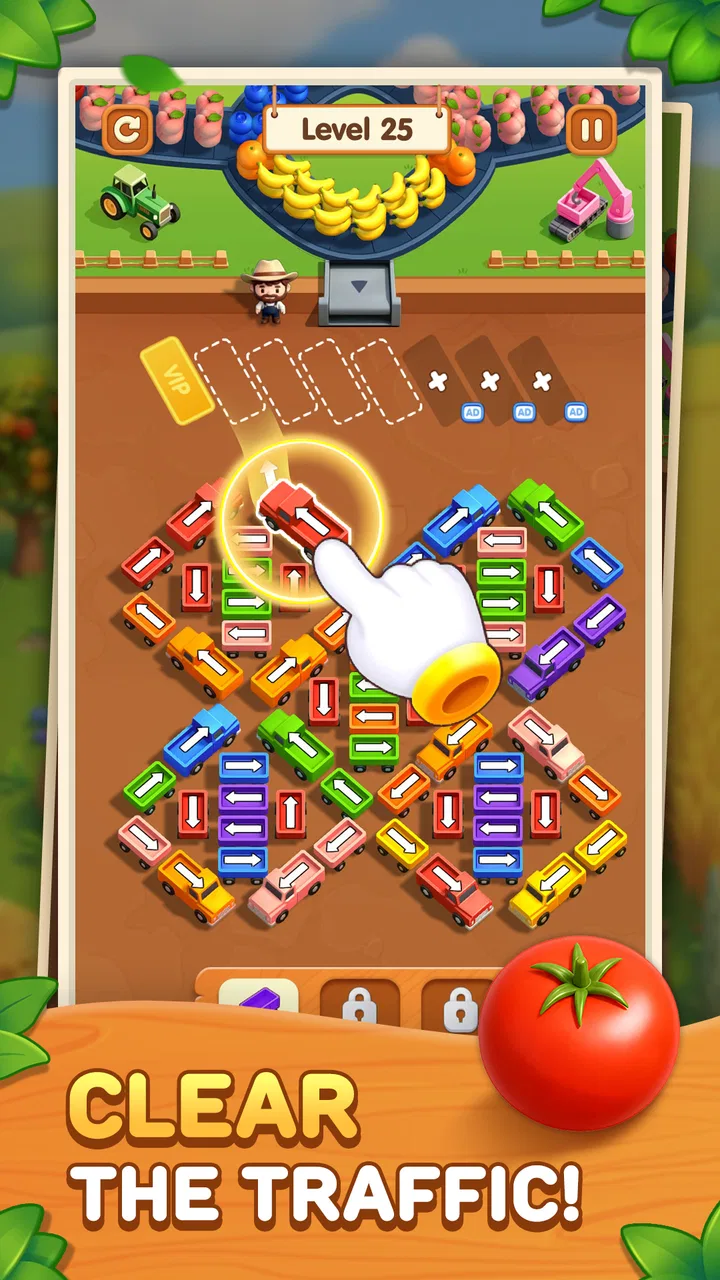
The game’s strongest design choice is the decision to combine several traffic and sorting ideas instead of making the whole experience about one repeated board. Color matching gives the game a more visual, pattern-focused rhythm. Truck sliding shifts the emphasis toward planning movement and avoiding blocked routes. Car parking makes space management more important, while escape puzzles ask you to understand how objects can be freed from a crowded arrangement.
That mixture matters because each activity creates a different kind of pause before a move. In a color puzzle, I look for relationships between pieces. In a traffic-style board, I first consider which vehicle has to move before anything else can happen. The result is a game that feels more varied than a standard match title, even though every individual challenge remains easy to understand.
I also found the farm presentation useful rather than merely decorative. A farm setting naturally supports trucks, cars, movement, and busy routes, so the theme gives the separate puzzle ideas a shared context. It does not turn the game into a farming simulator, and anyone expecting crop management or resource production should adjust that expectation. The farm is the setting for the puzzles, not a second game layered underneath them.
What makes it suitable for short sessions
The structure is well suited to players who do not want to commit to a long play session. You can approach a board, study the immediate problem, make a few moves, and stop without needing to remember a complicated plot or a large collection of rules. That makes it a practical choice for casual play on a phone rather than a game that demands your full attention for an extended period.
There is also a useful mental difference between the puzzle types. When I feel tired, a straightforward color-based challenge is easier to approach than a crowded vehicle arrangement. When I want something that feels more deliberate, the truck and parking situations offer more room to think before acting. This gives the game a small but meaningful advantage over a single-mode casual puzzler: I can choose the kind of concentration I want.
That flexibility is especially helpful in an everyday situation. Imagine having ten minutes before leaving home. A long strategy game would be inconvenient, but a compact puzzle is manageable. If the first board feels too demanding, the presence of other puzzle styles gives the session a chance to recover instead of ending immediately. I would not call that a major feature on its own, but it is one of the reasons the game works as a casual time-filler.
Where the puzzle variety helps and where it does not
Variety does not automatically mean depth. The four puzzle directions make the game feel broader, but players who prefer mastering one carefully balanced system may find the experience less focused. A dedicated parking puzzler can usually spend more time refining its traffic logic, while a dedicated match game can build a more elaborate rhythm around combinations and board planning. Farm Madness: Traffic Jam trades some of that specialization for accessibility.
In my view, that is a reasonable trade for the intended audience. The game is easier to recommend to families and occasional players because the basic ideas are recognizable. Someone who does not normally play puzzle games can understand a color task or a blocked-car problem without reading a long explanation. The downside is that experienced puzzle fans may reach the limits of the individual mechanics sooner than they would in a specialist title.
Another trade-off is the change in mental tempo. Moving from color matching to vehicle movement can be refreshing, but it can also make the overall progression feel less unified. I would prefer this game when I want a sampler of casual puzzles, not when I want to become highly skilled at one exact form of problem solving.
Practical ways to approach the harder boards
My most useful habit was to resist the urge to move the first object that looked available. In the truck, car, and escape-style puzzles, the visible opening is not always the important one. I first look for the vehicle or object that is blocking the greatest number of possible routes. Clearing that obstruction often creates more options than making a move that only helps one piece.
A second helpful approach is to treat the board as a sequence of dependencies. Before moving anything, I ask which item must leave first, which item can safely wait, and whether a temporary opening will disappear after another move. This is more reliable than reacting one move at a time. It is also the point where the game becomes more thoughtful than its simple presentation might suggest.
For color-focused puzzles, I try to scan the full arrangement before committing. Matching the most obvious colors immediately can remove a useful position or leave the remaining pieces awkwardly arranged. Looking for the next two or three relationships, rather than only the current match, makes the board easier to control. That small change in habit can be more valuable than playing faster.
Finally, I recommend using a failed attempt as information instead of repeating the same sequence. If a parking or escape board collapses after one move, the problem is often the order rather than the destination. Remembering which route became blocked lets you test a different opening on the next try. This is a simple tip, but it is particularly relevant to a game built around movement and access.
Who will enjoy it most
I think the best audience is someone who likes casual puzzles but gets bored when every level uses exactly the same rule. The game is also a good fit for players who prefer visual challenges over word puzzles or number-heavy logic. The Everyone age rating supports its broad, approachable presentation, although younger players may still benefit from an adult explaining the objective of a new puzzle type the first time it appears.
It should also suit people who want a free game for occasional use. The download has passed fifty thousand installs, and the average rating is 4.5 from around eight hundred fifty ratings, which suggests that the concept has found an audience. I treat those figures as context rather than proof that every player will enjoy it: a high average cannot replace personal preference, especially when the game combines several styles instead of committing to one.
I would skip it if your priority is a rich narrative, realistic driving, or a competitive multiplayer experience. It is not the right replacement for a full parking simulator, a serious traffic-management game, or a deep match puzzle. Its purpose is lighter: give you a handful of accessible problems, let you solve them at your own pace, and keep the presentation friendly.
How it compares with familiar alternatives
Compared with a conventional match-three game, this title offers more mechanical variety but less of the continuous rhythm that makes matching games satisfying for long sessions. You may prefer a specialist match game if you enjoy building combinations, chasing a particular score, or planning around a board that follows one consistent rule set.
Compared with a dedicated parking or traffic puzzle, Farm Madness: Traffic Jam is less narrowly focused. A specialist alternative may provide more demanding route planning and a stronger sense of progression within that one mechanic. This game is better when you want to switch between parking, sliding, matching, and escape tasks without installing several separate titles.
It also differs from traditional farm games in an important way. There is no reason to approach it expecting a long-term farm-building routine. The setting supplies the mood and the objects, while the actual play is puzzle solving. That makes it quicker to understand, but it also means players looking for collecting, decorating, or management systems may feel that the theme is only part of the experience.
What the current version means for players
The current release is version 1.1.3, and the game was released on June 11, 2026. Those details place this review around a relatively early stage of the product’s life rather than after years of established expansion. I see that as both a positive and a reason to keep expectations measured. The core concept is already clear, but the long-term shape of the game will depend on how Runyou develops the puzzle mix over time.
For someone installing it now, the practical benefit is that the game’s identity is easy to understand from the opening experience. You are not learning a complicated economy or a large collection of systems. You are learning how the different boards ask you to think. Existing players who have already adapted to the mixture should find the latest version familiar rather than radically transformed, since the available version number alone does not suggest a completely new direction.
I would pay attention to future updates that improve the relationship between the puzzle types. New boards would be welcome, but thoughtful progression would matter just as much. The best update would not simply add more traffic layouts; it would make players feel that their understanding of one puzzle style helps them approach another. That would give the farm setting and the mixed format a stronger sense of purpose.
Remaining friction and realistic limitations
The biggest limitation is the possibility of uneven depth. When a game includes several puzzle formats, some players will naturally connect with one mode more than the others. If your favorite activity is the truck-sliding section, you may wish the entire game spent more time developing that idea. If you prefer color matching, the vehicle boards may feel like interruptions rather than variety.
The broad age rating is another clue about the intended difficulty and tone. The game is welcoming, but it is unlikely to satisfy someone searching for punishing logic problems. That is not a defect for casual players; it is simply a boundary. I would choose a more specialized brain-training or logic title when I want a sustained challenge that tests the same skill repeatedly.
The free price makes experimentation easy, but it also changes how I judge the experience. I do not expect the same depth from a free casual game as from a premium puzzle designed around one polished system. At the same time, free does not mean every moment will suit every player. If you dislike switching objectives or prefer a clearly defined long-term goal, the absence of that focus may matter more to you than the lack of a purchase cost.
Device compatibility is reasonably friendly because the game supports Android 7.0 and later. That helps people with older phones try it without immediately needing a recent handset. Still, compatibility is not the same as identical comfort on every screen. Puzzle games depend on seeing the whole arrangement clearly, so I would be more cautious on a very small display or when touch controls feel cramped.
What I would watch as the game evolves
The next meaningful sign of progress would be stronger differentiation between the four puzzle families. I would like to see each one develop its own learning curve while still fitting the relaxed farm atmosphere. If future content simply repeats the same board ideas, the initial variety may lose its impact. If updates add clever combinations of movement, color, and escape logic, the mixed format could become the game’s real strength.
I would also watch how the game handles difficulty pacing. A good casual puzzle can be easy to enter without becoming predictable. The ideal progression would teach a new idea through a forgiving board, then ask the player to apply it under tighter spatial conditions. That would preserve the Everyone-friendly presentation while giving returning players a reason to keep practicing.
For existing users, the most important question is whether updates respect the short-session appeal. More content is useful, but not if every board becomes so involved that the game loses its quick, relaxing character. I would rather see carefully structured puzzles that can be understood in a moment and solved through thoughtful moves than oversized challenges that turn a simple break into a frustrating commitment.
My recommendation after playing
Farm Madness: Traffic Jam is a pleasant choice for casual puzzle fans who value variety over specialization. I like that it gives color matching, truck movement, car parking, and escape situations a common farm-flavored home. The game is free, accessible to a broad audience, and easy to pick up without demanding a large time investment.
My recommendation is more selective for experienced players. If you want the deepest possible parking logic, the most elaborate matching system, or a substantial farm simulation, a dedicated alternative will serve you better. If you want a compact collection of approachable puzzles for spare moments, this release makes a convincing case for itself.
In everyday use, I would keep it installed as a low-pressure option rather than as my main game. Its value comes from giving me something different to solve when I have a few minutes and do not want a story, a competition, or a complicated commitment. That is a modest goal, but the game meets it well. Its best quality is the ability to change the kind of thinking required without making the experience feel intimidating.
FAQs for Farm Madness: Traffic Jam
01What is Farm Madness: Traffic Jam, and how is the gameplay structured?
Farm Madness: Traffic Jam is a casual puzzle game built around organizing vehicles and managing crowded farm roads. You generally need to guide tractors, trucks, or other vehicles through traffic without causing collisions or blocking important paths. The gameplay is easy to understand at first, but later stages introduce tighter spaces, more vehicles, and timing challenges that require planning rather than simply tapping quickly.
02Is Farm Madness: Traffic Jam suitable for children and casual players?
The game is designed to be accessible, with straightforward controls and short levels that are easy to play in brief sessions. Its colorful farm setting and simple traffic puzzles can appeal to children and casual players, although some later levels may require patience and careful thinking. Parents should still check the app’s age rating, advertising, and in-app purchase information before allowing younger children to play.
03Can Farm Madness: Traffic Jam be played without an internet connection?
Many puzzle games in this style allow at least part of the main gameplay to work offline, which can make Farm Madness: Traffic Jam convenient for travel or areas with weak connectivity. However, features such as advertisements, rewards, updates, cloud synchronization, or purchases may require an internet connection. Because offline availability can change between versions and devices, it is best to test the game after installation before relying on it without mobile data.
04Does Farm Madness: Traffic Jam contain ads or in-app purchases?
Farm Madness: Traffic Jam may use advertising or optional purchases as part of its free-to-play model. Ads can appear between levels or when you choose to receive bonus rewards, while purchases may provide extra items, remove advertising, or help with difficult stages. Before downloading, review the store listing and purchase settings carefully, especially if children will use the device, since the exact offers can vary by platform and region.
05What should I do if a level becomes difficult or the game does not respond as expected?
When a traffic puzzle seems stuck, restarting the level and observing the vehicle routes before making the first move is usually more effective than tapping rapidly. Look for blocked exits, vehicles that must move first, and spaces that can be used temporarily. If the application freezes, update it, close and reopen it, and check your device’s available storage. Persistent problems should be reported through the developer’s support channel with your device and operating-system details.
Pros
- Simple controls make it easy to pick up and play.
- Colorful farm-themed visuals are cheerful and appealing.
- Short levels fit well into quick gaming sessions.
- Increasing traffic challenges keep the gameplay engaging.
- Works well for casual players seeking a relaxing puzzle experience.
Cons
- Some levels may feel repetitive after extended play.
- Difficulty spikes can make later traffic puzzles frustrating.
- Ads may interrupt the experience for free players.
- Limited variety in objectives reduces long-term replay value.
- Requires careful timing
- which may not suit impatient players.

Farm Madness: Traffic Jam
Gallery